
Reno County Booking Photo Records
A mugshot is an identification photograph made as part of an arrest or corrections process. It remains tied to that event after a person leaves custody, but the image itself does not say whether the person posted bond, completed a sentence, transferred to another agency, entered supervision, or was discharged. The custody record supplies that context.
Kansas access rules require care. The Kansas Attorney General explains that mugshots and standard arrest reports may be discretionarily closed under K.S.A. 45-221(a), while the front page of the standard offense report is open. “Discretionarily closed” means the law may allow the custodian to withhold the image. It does not mean every Reno County photo must be released, nor does it mean every image is sealed.
Ask for the booking photo separately from the booking/release sheet. If the Reno County custodian withholds it, request the legal ground in writing. The booking record can still establish the release date, release type, and destination even when the photograph is unavailable.
Reno County Mugshot Sources
First classify the image. A Reno County jail booking photo belongs with the sheriff’s booking record. A KDOC offender photo belongs to a state sentence. A KBI registry photo exists only for a person covered by registration law. A press image may be editorial or case-specific rather than a booking photograph.
| Channel | Has a photo? | How to access and read it |
|---|---|---|
| Reno County release feed | No discovered public archive | The official inmate-information page does not provide a historical 24-hour or 72-hour photo feed. |
| Reno County records request | Possible, not guaranteed | Request the booking photograph separately; the custodian may close it under Kansas law. |
| KASPER | May show a KDOC image | Use for a state-sentenced person and read status and movements with the photograph. |
| Kansas offender registry | Yes for covered registrants | Use only for the statutory sex, violent, and drug offender population. |
| Government or news release | Sometimes | Keep the source, date, and case context; publication is episodic. |
| Third-party archive | Sometimes | Treat only as an unverified lead because images may be stale, mislabeled, or unrelated to release. |
Kansas VINE is a custody-notification service, not a Reno County mugshot archive. Even when a system shows an image, confirm identity with more than appearance. Names, dates of birth, booking or KDOC numbers, facility, case, and movement fields provide a firmer match.
No Reno County Mugshot App
No official Reno County sheriff mobile app with release lists or booking photos was identified in the reviewed Sheriff, Correctional Facility, or Inmate Information sources. There is also no discovered public sheriff release-photo feed. A current image disappearing from an online custody view would not, by itself, prove a release.
The Reno County Inmate Information page is the county’s official jail-information route. It should be used for contact and custody questions, not described as a photo archive. The related Reno County 24-Hour Release List explains the same-day verification chain when no official release feed exists.
VINELink can be used on a mobile device, but it is a statewide system rather than a sheriff app. Kansas VINE covers participating county jails and excludes the KDOC prison population. For a person connected with Hutchinson Correctional Facility, KASPER and KDOC records are the proper state channels.
Unofficial booking apps and “recently booked” pages may focus on arrest intake rather than release. They can keep images long after a status change and may not disclose refresh or retention practices. They should never replace the Reno County custody record.
Request a Reno County Mugshot
Use the Reno County Records page and the county request form for a booking photograph. A precise request is easier to route and less likely to require clarification. Seek an existing image, not a new report or edited file.
- Identify the person by full name and aliases in the record. Add the approximate booking date and date of birth when appropriate.
- Include the booking number, court case number, or originating agency when known.
- Request the associated booking photograph as a separate item from the booking/release sheet and custody-event record.
- Ask for electronic delivery, accept lawful redactions, and request a cost estimate before charges exceed a stated limit.
- If the image is withheld, ask the custodian to identify the statutory basis in writing.
The formal county request entry point is shown below.
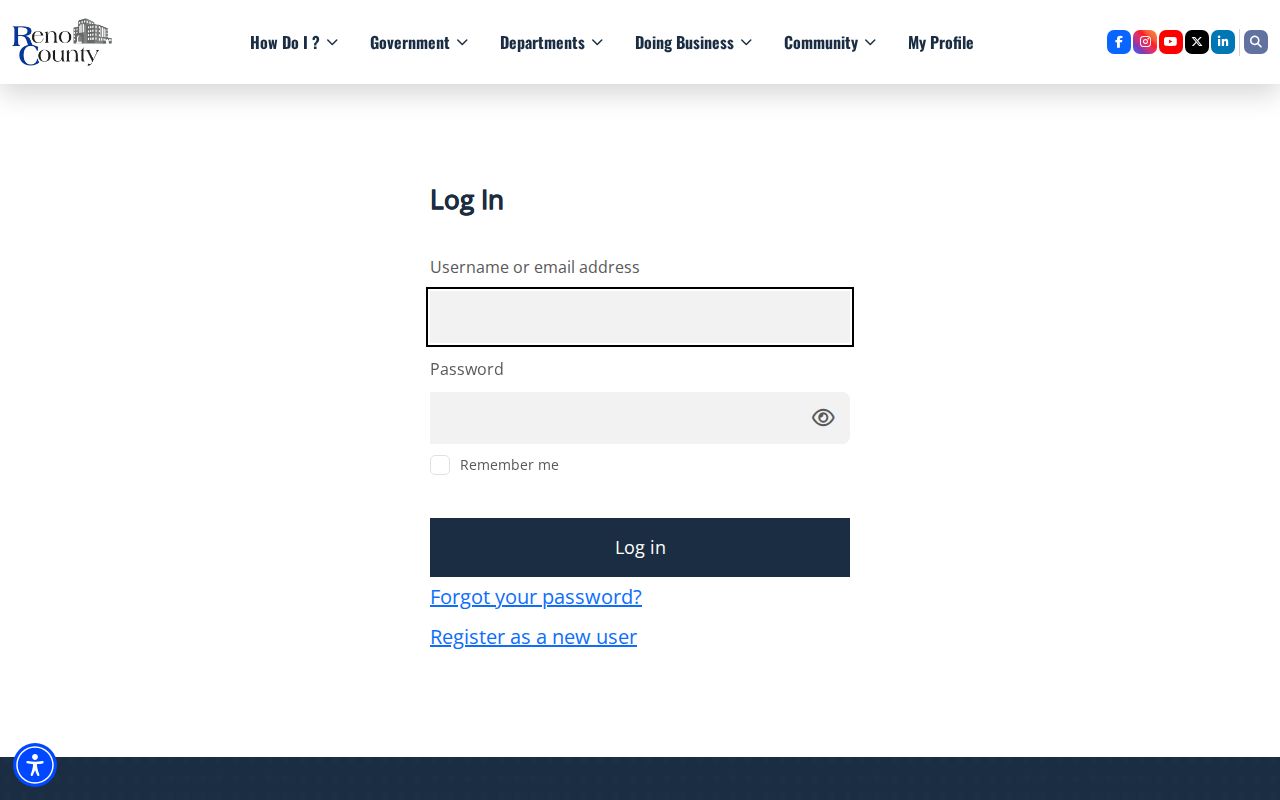
The form opens the request process. It does not promise that a booking photo is public or that Reno County maintains a ready-made release gallery.
Under K.S.A. 45-218, an agency must act on a request as soon as possible and no later than the end of the third business day. Action can include production, denial, a request for clarification, or a detailed explanation of delay. It is not a universal three-day production promise. Reasonable actual costs for search, review, redaction, and copies may apply.
Note: A narrow electronic request can reduce review and copy work, but Reno County has no researched local photo fee that should be assumed.
Reno County State Offender Images
A person sentenced to KDOC belongs in KASPER. The public state record may display a photograph with the person’s name, KDOC number, physical description, convictions, location, movements, sentence fields, supervision, and discharge status. KDOC warns that an image may not have been taken on the displayed image date.
A KASPER photo is useful for identity matching, but it is not necessarily the Reno County booking image. Its presence does not establish that a person has left prison. Read the current status and movement record. “Inmate” means KDOC confinement. Parole or postrelease supervision means the person has left confinement but continues the sentence under supervision. “Discharged” is the stronger public marker that KDOC obligations ended, subject to working-day updates.
Compare the KDOC number, conviction county, case, physical description, and current status before relying on an image. Photographs change, and visual resemblance is subjective. The official identifiers connect the person to the state record. The movement and supervision fields, not the picture, explain what happened after confinement.
The Kansas registered-offender search is narrower. It can show a photograph for covered sex, violent, or drug offenders. K.S.A. 22-4904 addresses release-related registration preparation and an identifying photograph, while K.S.A. 22-4905 covers update duties. Registry presence does not prove a release date, parole, or present freedom. Most released people do not belong in that registry at all.
KDOC records may also be requested through its official public-records portal. Ask for the public photograph, movement or release event, and supervision or discharge record that applies. This keeps a state-prison image tied to state status rather than confusing it with a Reno County jail event.
Reno County Photo Context
A Reno County Sheriff release or an attributable local news report may include a picture in a case-specific story. That coverage is episodic. The lack of a story or image does not mean no arrest or release occurred, and a press photograph may not be a mugshot.
When an image appears in news coverage, preserve the publisher, date, caption, and event context. Then verify release through Kansas VINE, the Reno County booking/release record, the court docket, or KASPER. A dated story may remain online long after the person’s custody and case status have changed.
Commercial aggregators can preserve arrest images after an official live display changes. Their labels may be stale, scraped, or wrong, and a “recently booked” entry does not verify release. No commercial mugshot publisher or removal service is endorsed or linked here. Official government records remain the preferred source.
Reno County Mugshots After Expungement
Expungement is a court process that limits access to qualifying official records under specific Kansas statutes. It should not be described as an instant deletion tool for every copy of a Reno County image. Criminal-conviction expungement is governed by K.S.A. 21-6614. Arrest expungement uses K.S.A. 22-2410, while municipal convictions use K.S.A. 12-4516.
The local timing point is important. Under K.S.A. 21-6614, a waiting period commonly runs from satisfaction of the sentence or discharge from probation, community corrections, parole, postrelease supervision, conditional release, or a suspended sentence. Walking out of jail or prison may occur well before discharge. A KASPER status of parole or postrelease generally indicates that the state sentence remains active.
Once an order applies, official custodians generally cannot disclose covered expunged arrest, conviction, diversion, or incarceration records outside statutory exceptions. Yet an expungement order should not be promised to erase every private copy made before the order. Seek case-specific advice from qualified counsel or the court process when legal effect matters.
No express Kansas law banning commercial mugshot publication or payment for removal was located in the reviewed official statute research. That limited result should not be stretched into a permanent claim. The concrete sourced Kansas rule is that mugshots may be discretionarily closed under KORA.
For the release record and named-person custody path, use the Reno County released inmates search. The photo should always remain secondary to the record that identifies the actual custody event.
Keep the image’s source and access date with any saved copy. That context helps prevent an old arrest photograph from being presented as a current release image.
Public Record Search
Sponsored Results